
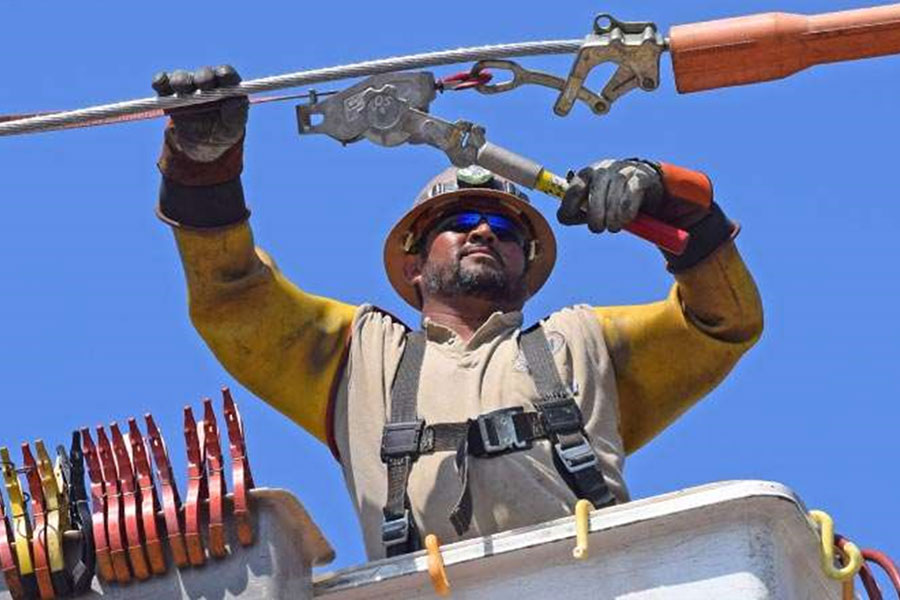
High-voltage transmission lines carry massive power — but also extreme danger if not handled correctly. Each year in India, around 12,500 people die from electrical injuries—over 30 deaths per day—compared to roughly 1,000 in the U.S. While official data on non-fatal shocks is limited, estimates suggest electrical causes account for 40% of workplace fatalities, highlighting a critical need for improved electrical safety standards and awareness. Arc flashes in switchgear send thousands to burn centers annually. Because most electrical fatalities are preventable, strict safety protocols and the right tools are vital. Line crews and engineers must verify circuits are dead, bleed off stored charge, and isolate themselves from fault currents. Investing in and correctly using HV safety equipment – from detectors and discharge sticks to grounding sets, rescue hooks and PPE – is the best defense against the deadly risks of high-voltage work.
Electrocution and arc-flash incidents remain a serious concern in India’s industrial landscape. According to national data, electrocution deaths rose from 8,945 in 2011 to over 13,000 in 2020, averaging nearly 30 fatalities per day. The construction sector alone sees thousands of such incidents annually, with Delhi reporting over 120 cases of electrical shocks among workers in just two years. Severe arc-flash injuries, often caused by outdated systems or lack of protective gear, have also been documented—some requiring extensive surgeries and months of recovery. These figures make it clear: following safety protocols, using certified PPE, and conducting regular training isn’t just good practice—it’s lifesaving.
Key Safety Tools for High-Voltage Work
Maintaining high-voltage equipment safely relies on proven tools and methods. Below we explain the five essential items every HV line worker or engineer should use:
High-Voltage Detectors
Before touching any lines or apparatus, workers confirm the absence of voltage. Insulated, non-contact HV detectors (sometimes called “voltage tracers”) are held near conductors to check for live power. They give audible and visual alarms if voltage is present. Best practice is to test the detector on a known live source first, then approach the target line or device. If the detector stays silent, the equipment is presumed de-energized. For example, before maintenance a lineman might hold the HV detector’s probe close to a downed line; the unit beeps and lights up if any residual energy remains. This step prevents work on a “hot” line.
How to use: Always verify the detector first, then sweep it over switches, clamps or cable ends. Maintain recommended safe distances as per NFPA 70E or OSHA guidelines.
Real-world tip: Many utilities now equip crews with helmet-mounted voltage detectors (wearable units that signal live energy) for constant awareness.
HVTI product reference: (High Voltage Detector) HVTI’s High Voltage Detectors feature high-sensitivity sensing of 220V LT and above up-to 765kV, plus flashing LEDs and beeps to alert workers to stray voltage before they make contact. Proper training on detector use is critical – it’s the first line of defense when doing live-line checks or confirming de-energization.
Wearable option: HVTI’s Helmet-Mounted Voltage Detector helps ensure real-time awareness during operations.

HVTI HV Detector
Discharge (Grounding) Rods
Once a line or transformer is isolated, it can still hold a dangerous static charge or induced voltage. Discharge rods (also called grounding sticks or earthing sticks) are heavy-duty insulated poles fitted with a grounding clamp. After verifying “dead,” the worker attaches the clamp to the conductor or metal enclosure and connects to a ground point. This safely bleeds off stored energy into the earth. In practice, a lineman might clamp a discharge stick onto a 11 kV cable end post-switch, holding it until the meter shows zero voltage. This ensures no surprise sparks when metal parts are handled.
Safety benefit: Discharging lines prevents arc faults and shocks from residual energy. It’s especially crucial after capacitor or transformer tests, where dielectric charging can occur.
Procedure: Always ground each phase and the neutral one by one. Use approved grounding sets sized for the system. Leave the sticks connected until work is complete.
HVTI product reference: Discharge Rods Rated up to 100kV/Feet, HVTI discharge rods come with flexible insulated handles and robust brass clamps for secure operation.

HVTI Discharge Rod
Portable Grounding Equipment (Earthing Sets)
Even a de-energized line can be re-energized accidentally (for example by a wrong switch or a backup circuit). To eliminate this hazard, crews install temporary grounding cables to bond conductors to earth potential. OSHA notes that portable grounding sets “must be able to carry and withstand the maximum fault current” of the |||| meaning they provide a low-impedance path if the line is energized. In the field, once a circuit is opened and tested, workers clamp grounding leads (often with double clamps) onto each phase and the neutral. This ties all points together and to true earth. If a hidden source applies power, the current safely flows into ground instead of through the worker.
Sizing: Use heavy copper cables (#2 AWG or better on high-voltage lines) and oversized clamps. For large networks, paralleling multiple cables is common.
Crew practice: Grounding is typically done immediately after discharge sticks, and before starting any maintenance. Workers attach the last clamp to a verified earth (e.g. a ground rod or station ground).
HVTI product reference: Portable Earthing EquipmentThese kits include color-coded conductors and clamps designed for 11–33 kV systems, meeting safety requirements for rapid equipotential bonding.

Portable Earthing Equipment
Rescue Hooks (Insulated Rescue Sticks)
In worst-case emergencies (e.g. a colleague is being shocked by a live line), rescue hooks are life-saving. These are long, insulated fiberglass poles with a hooked end. A coworker uses a rescue stick to drag a victim away from danger or to pull energized conductors off a victim without getting closer. Importantly, they allow rescuers to assume the victim is still energized and act from a distance. As one safety guide emphasizes, rescue hooks “protect the rescuer against electrical shock” while retrieving
Usage: Keep rescue hooks staged at substations and on line trucks. In an emergency, first turn off all possible power to the victim. If the victim is still in contact with the source, the rescuer uses the hook to remove them (for example, pulling a downed hot line off a worker’s body).
Procedure: Always presume the scene is still live until proven otherwise. The rescuer stands on insulating shoes or platform, grips the insulated pole, and connects/disconnects the hazard at arm’s length.
HVTI product reference: (Rescue Sticks) Rated for 100kV/feet. These fiberglass sticks come with non-slip grips and swivel hooks for efficient emergency response.

6 Feet Electrical Rescue Hook
Personal Protective Equipment (PPE) Kits
No matter how careful, electrical energy can arc unexpectedly, so workers wear PPE as the last barrier. A typical HV PPE kit includes:
- Insulating gloves and sleeves
- Hard hat / helmet (Class B or higher)
- Arc-flash suit or flame-resistant clothing
- Safety glasses/face shield
- Safety boots
Every item must be rated for high-voltage duty. Consistent use of the right PPE drastically lowers injury severity. Many electrical accidents involve workers not wearing full PPE at the time.
HVTI offers a complete range of certified HV PPE safety gear to ensure maximum protection for electrical professionals. For more information or to discuss your specific requirements, feel free to contact us using the details provided below.
Protocols That Save Lives
Strict procedures and training tie all this equipment together. A proven workflow is:
- De-energize and lock out the line.
- Test for voltage with an HV detector.
- Discharge residual charge with rods.
- Apply grounding cables to tie everything to earth potential.
- Perform maintenance, wearing full PPE at all times.
When followed correctly, this sequence can drastically reduce the likelihood of electrical injury or death. Each layer of defense – detectors, rods, grounds, rescue gear, and PPE – is critical.
High-voltage lines are an essential part of modern power grids, but they demand respect. With lives on the line, every step of safety must be honored. Investing in the right tools pays off: a fatal accident avoided is immeasurable.
HVTI’s suite of high-voltage safety equipment – including the High Voltage Detector, Helmet-Mounted HV Detector, Discharge Rods, Portable Earthing Equipment, and Rescue Sticks – is built to meet the most stringent demands of fieldwork. Combined with training and safety protocols, they help keep engineers and line workers safe every day.
Let’s commit to making “zero accidents” more than a slogan — with the right tools, it’s possible.